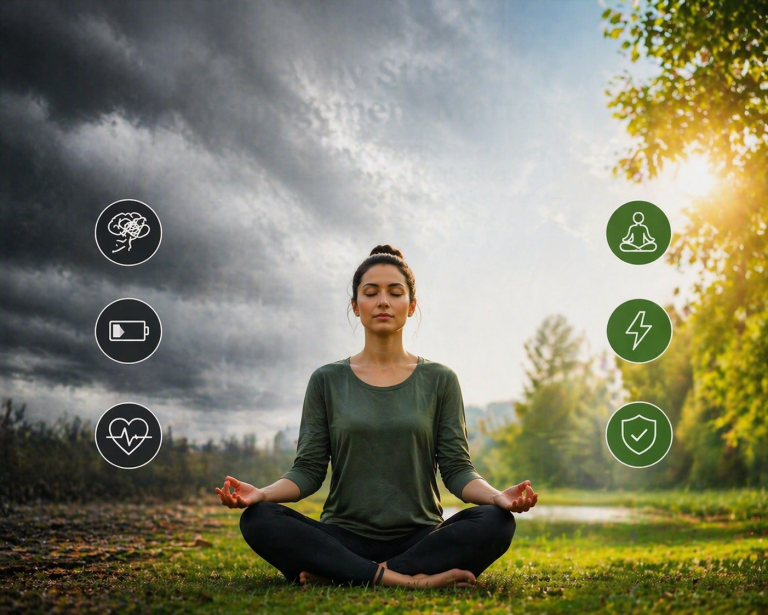

Why Managing Daily Stress Matters
When stress becomes a regular part of life, your body produces higher levels of cortisol, the primary stress hormone. Long-term elevated cortisol level may led to poor sleep fatigue, difficulty concentrating, anxiety, weakened immunity and risk increasing blood pressure. There are lots of natural ways to reduce stress day by day.
Here are 10 proven techniques that can help reduce daily stress naturally.

1
Practice Deep Breathing
Deep breathing is one of the fastest ways to calm your nervous system. It helps by slowing your heart rate, lowering cortisol levels, and improving oxygen flow.

2
Create a Consistent Morning
Routine
Starting your day with intention reduces mental chaos. A stress-free morning routine may include: Stretching, Meditation, Journaling Healthy breakfast

3
Get Regular Physical Activity
Exercise naturally reduces stress by releasing endorphins. Even 20 minutes of Walking, Yoga, Cycling, or Light stretching daily can make a difference.
4
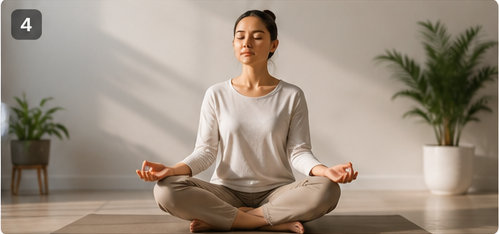
Practice Mindfulness
Mindfulness helps you focus on the present moment instead of worrying about the future. Some simple mindfulness practices which reducces mental overwhelm include: Body scan meditation, Observing your breathing, Sitting quietly for 5 minutes.

5
Limit Screen Time
Constant notifications and digital overload increase stress. A short digital detox can calm your mind. Try: Turning off unnecessary alerts, Taking screen breaks AND Setting no-phone periods

6
Prioritize Quality Sleep
Sleep is essential for emotional recovery. Improve sleep by: Going to bed at regular time interval, Avoiding screens before bed and Keeping your room cool and dark
Better sleep improves stress resilience.

7
Eat Stress-Reducing Foods
Nutrition affects your mood and brain function. Avoid excessive caffeine and sugar. Best helpful foods for you include: Leafy greens, Nuts and seeds, Whole grains, Berries and Herbal teas.

8
Stay Organized
Disorganization often creates unnecessary stress. Here are some clear planning that can help reduces overwhelm: Make daily to-do lists, Prioritize tasks and Break big tasks into smaller steps.

9
Connect with Supportive People
Talking to trusted friends or family helps release emotional tension. Social connection helps by improving: Emotional balance, Perspective and Resilience. You don’t have to manage stress alone.

10
Make Time for Relaxation
Intentional relaxation is essential. This really helps reset your nervous system. Try: Reading, Listening to music, Spending time in nature
and Meditation
Frequently Asked Questions
Final Thoughts
Managing daily stress does not require drastic changes. Small, consistent habits like breathing exercises, movement, healthy eating, and quality rest can significantly improve your emotional well-being. Start with one or two techniques and build gradually. Your mental wellness deserves daily attention. Create your own stress plan for sustainable wellness.