
Time Management Strategies to Reduce Stress

Why Time Management Matters
Many people believe stress comes from having too much to do. In reality, stress often comes from feeling overwhelmed, disorganized, or unsure where to start.
When tasks pile up, deadlines approach, and responsibilities compete for attention, stress levels naturally increase.
Good time management will help you in the following ways:
Managing your time effectively allows you to feel more in control of your day and your well-being.
The Connection Between Time Management and Stress
Poor time management often leads to:
- Missed deadlines
- Last-minute rushing
- Mental fatigue
- Poor work-life balance
- Increased anxiety
Effective planning helps reduce uncertainty and creates a sense of control, which is one of the most powerful stress-management tools available.
Signs Your Time Management Needs Improvement
You may need better time management if you:
- Frequently feel rushed
- Miss deadlines often
- Constantly multitask
- Forget important tasks
- Feel overwhelmed by your schedule
- Struggle to balance work and personal life
Recognizing these signs is the first step toward positive change.
Time Management Statistics
| Time Management Factor | Impact |
|---|---|
| Daily Planning | Associated with improved productivity and reduced stress |
| Prioritizing Tasks | Helps individuals focus on important activities first |
| Regular Breaks | May improve concentration and reduce mental fatigue |
| Limiting Multitasking | Often increases efficiency and task completion |
| Work-Life Balance | Linked to better mental health and lower stress levels |
1. Start Each Day with a Plan
One of the easiest ways to reduce stress is to know exactly what needs to be done.
Every morning:
- Review your tasks
- Identify priorities
- Create a realistic schedule
A simple plan can prevent mental clutter and improve focus.
2. Prioritize Important Tasks
Not every task is equally important.
Ask yourself:
What must be completed today?
Focus on high-priority tasks first before moving to less important activities.
A useful approach is:
Important and urgent
Do immediately.
Important but not urgent
Schedule it.
Urgent but not important
Delegate if possible.
Neither urgent nor important
Eliminate or postpone.
3. Break Large Tasks into Smaller Steps
Large projects can feel overwhelming.
Instead of focusing on the entire project:
Break it into manageable actions
For example:
Write a report
- Research topic
- Create outline
- Write introduction
- Complete first draft
- Edit final version
Small wins build momentum and reduce anxiety.
4. Learn to Say No
Overcommitting is a common cause of stress.
Protect your time by:
- Setting boundaries
- Avoiding unnecessary obligations
- Prioritizing your well-being
Saying no to some things allows you to say yes to what truly matters.
5.Use Time Blocking
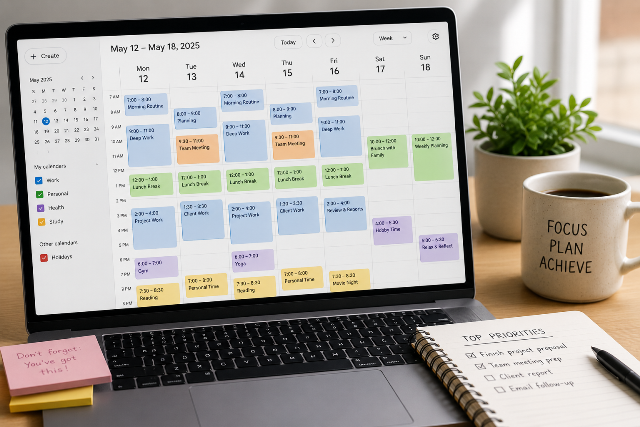
Time blocking involves assigning specific periods for specific tasks.
Example:
| Time | Activity |
|---|---|
| 8:00 AM | Planning and emails |
| 9:00 AM | Important project work |
| 11:00 AM | Meetings |
| 1:00 PM | Administrative tasks |
| 3:00 PM | Exercise or walk |
This method reduces distractions and improves concentration.
6. Avoid Multitasking
Many people believe multitasking saves time, while research suggests the opposite. Switching between tasks can:
- Reduce focus
- Increase mistakes
- Create mental fatigue
Instead:
Focus on one task at a time
Quality often improves when attention remains on a single activity.
7. Schedule Breaks Throughout the Day
Taking breaks is not a waste of time.
Short breaks can help:
- Improve focus
- Reduce stress
- Restore mental energy
Try:
- A short walk
- Stretching
- Deep breathing
- Drinking water
Even five minutes can make a difference.
8. Limit Digital Distractions
Constant notifications can disrupt concentration.
Helpful strategies:
- Silence non-essential notifications
- Use focus mode
- Schedule specific times to check email
Reducing interruptions by digital detox, helps maintain productivity and reducess stress.
9. Create Healthy Routines
Consistent routines reduce decision fatigue.
Examples include:
Morning Routine
- Wake up at the same time
- Exercise
- Plan your day
Evening Routine
- Review accomplishments
- Prepare for tomorrow
- Disconnect from screens
Healthy routines create structure and reduce stress. Read more on building a stress-free morning routine
10. Make Time for Self-Care
Productivity should never come at the expense of your health.
Schedule time for:
- Exercise
- Family
- Hobbies
- Relaxation
- Sleep
Self-care helps prevent burnout and improves resilience.
Benefits of Effective Time Management
Practicing good time management may help:
A Simple Stress-Reducing Daily Schedule
| Time | Activity |
|---|---|
| 7:00 AM | Morning routine |
| 8:00 AM | Plan priorities |
| 9:00 AM | Focused work session |
| 11:00 AM | Short break |
| 1:00 PM | Lunch and movement |
| 2:00 PM | Important tasks |
| 5:00 PM | Review and prepare for tomorrow |
| Evening | Relaxation and family time |
Frequently Asked Questions
Final Thoughts
Stress often feels unavoidable, but many daily stressors can be reduced through better time management. By planning your day, prioritizing important tasks, limiting distractions, and creating healthy routines, you can feel more organized, productive, and in control.
Small improvements in how you manage your time can lead to significant improvements in your mental well-being. Start with one strategy today and build from there.
References
Harvard Business Review – Time Management Insights
American Psychological Association – Stress Management Resources
Mayo Clinic – Stress Management Basics
Centers for Disease Control and Prevention – Coping with Stress