The Link Between Stress and Sleep Problems
Have you ever felt exhausted but struggled to fall asleep because your mind wouldn’t stop racing?
You’re not alone. Stress and sleep are closely connected. In fact, poor sleep can increase stress levels, while chronic stress can make it difficult to get quality sleep. This creates a cycle that can affect both mental and physical health. Understanding this relationship is the first step toward improving your overall well-being.
How Stress Affects Sleep
When you’re stressed, your body releases hormones such as cortisol and adrenaline.
These hormones prepare your body for action, which is helpful during short-term challenges. However, when stress becomes chronic, your body remains in a heightened state of alertness.
This can lead to:
- Difficulty falling asleep
- Frequent nighttime awakenings
- Restless sleep
- Early morning waking
- Poor sleep quality
As a result, your body doesn’t get the restorative rest it needs.That is why we also encourage, building a stress-free morning routine.
How Poor Sleep Increases Stress
Sleep is essential for emotional regulation and recovery. When sleep quality declines, the brain becomes more sensitive to stress.
Poor sleep may cause:
- Increased irritability
- Difficulty concentrating
- Reduced patience
- Increased anxiety
- Lower emotional resilience
Over time, this can make daily stress feel more overwhelming.
Signs Stress Is Affecting Your Sleep
Common warning signs include:
Physical Signs
- Fatigue during the day
- Frequent headaches
- Low energy levels
Mental Signs
- Racing thoughts at bedtime
- Excessive worry
- Difficulty relaxing
Sleep-Related Signs
- Trouble falling asleep
- Frequent waking during the night
- Feeling tired after sleeping
Stress and Sleep Statistics
| Sleep & Stress Factor | Research Findings |
|---|---|
| Adults Reporting Stress-Related Sleep Problems | Stress is one of the most common causes of sleep disturbances |
| Sleep Deprivation | Poor sleep can increase emotional reactivity and stress sensitivity |
| Chronic Stress | Associated with higher cortisol levels and disrupted sleep patterns |
| Relaxation Techniques | May improve sleep quality and reduce perceived stress |
| Regular Exercise | Linked to better sleep duration and reduced stress levels |
The Stress-Sleep Cycle
Stress Increases → Cortisol Levels Rise → Sleep Quality Decreases → Fatigue and Anxiety Increase → Stress Feels Worse → Cycle Repeats
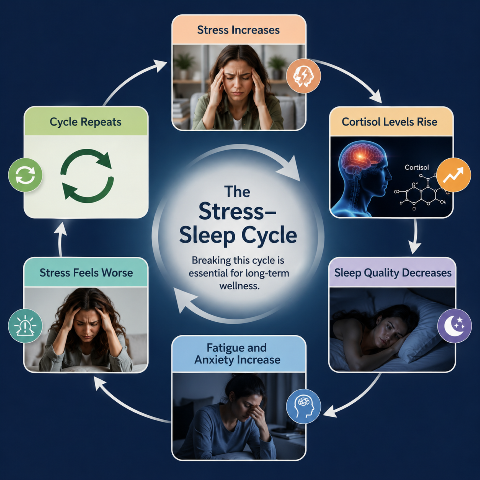
Breaking this cycle is essential for long-term wellness.
How to Improve Sleep When Stressed
1. Create a Consistent Sleep Schedule
Go to bed and wake up at the same time every day. A consistent routine helps regulate your body’s internal clock.
2. Practice Relaxation Before Bed
Helpful techniques include:
- Deep breathing
- Meditation
- Gentle stretching
- Reading a book
Avoid stimulating activities close to bedtime.

3. Limit Screen Time
Phones, tablets, and televisions emit blue light that can interfere with sleep. Try to avoid screens at least one hour before bedtime. You can reduce stress from limiting screen time pretty well through Digital Detox.
4. Exercise Regularly
Physical activity helps reduce stress hormones and improve sleep quality.
Good options include:
- Walking
- Yoga
- Cycling
- Light strength training
5. Create a Relaxing Sleep Environment
Your bedroom should be:
- Quiet
- Cool
- Dark
- Comfortable
A peaceful environment encourages better sleep.
Foods That May Support Better Sleep
Consider including:
Sleep-Friendly Foods
- Bananas
- Oats
- Almonds
- Kiwi
- Herbal tea
Limit Before Bed
- Caffeine
- Sugary snacks
- Heavy meals
- Energy drinks
Nutrition can play an important role in sleep quality.
Benefits of Better Sleep and Lower Stress
Improving sleep may help:
Simple Evening Routine for Better Sleep
1 Hour Before Bed
- Turn off screens
30 Minutes Before Bed
- Practice deep breathing
15 Minutes Before Bed
- Read or journal
Bedtime
- Keep lights low and relax
Consistency is key.
Frequently Asked Questions
Final Thoughts
Stress and sleep are deeply connected. When stress disrupts sleep, it becomes harder for the body and mind to recover. Likewise, poor sleep can make everyday challenges feel more difficult to manage.
By creating healthy sleep habits and practicing stress-management techniques, you can improve both sleep quality and overall well-being. Small changes made consistently can lead to lasting results.